Teen Drug and Alcohol Use in the US: Statistics


Teen substance use is a pivotal concern in the United States. Although rates of smoking and binge drinking have declined markedly over the past decade, issues such as marijuana use, e-cigarette (vaping) trends, and prescription medication misuse warrant close attention.
In this article, we’ll explore the current landscape of teen drug and alcohol use, drawing from national surveys and health agency data. We’ll examine how factors like family environment, peer influences, and socioeconomic status shape adolescent substance use. We will also review how effective prevention programs can be, what treatment success typically looks like for teens, and how comprehensive support systems help reduce risks and promote long-term recovery.
Key Statistics at a Glance
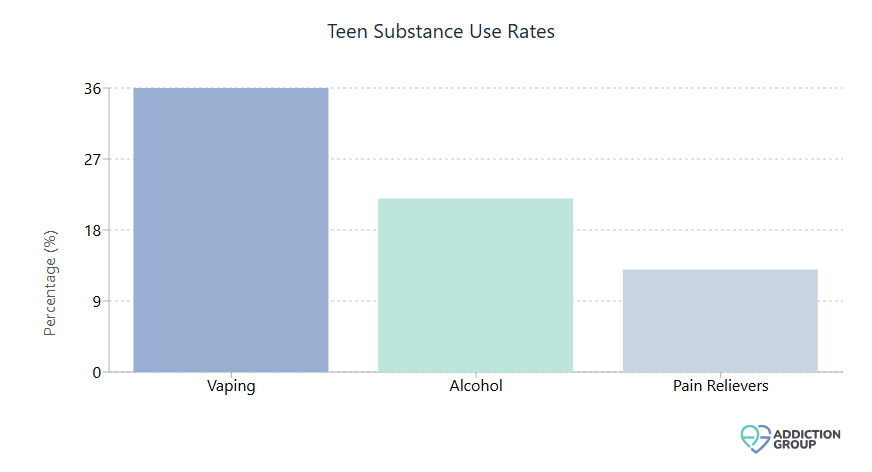
- 22% of high school students report drinking alcohol in the past month, down from nearly 40% a decade ago.
- Over 90% of adults with substance use disorders began using before age 18.
- Approximately 12–14% of teens have misused a prescription pain reliever at least once.
- 36% of adolescents say they’ve tried vaping (nicotine or cannabis), reflecting a notable shift from traditional cigarette smoking.
Understanding Teen Substance Use Trends
Teenagers in the U.S. are using some substances far less than previous generations did - cigarette smoking has reached historic lows, and underage drinking rates have dropped significantly. At the same time, vaping emerged as a dominant form of nicotine consumption, marijuana use remains common (though also showing signs of decline in certain surveys), and prescription medication misuse persists as a serious concern.
Why is this data important? Beyond simply indicating “who’s using what,” it tells us how youth might be accessing substances, what social factors drive experimentation, and which prevention strategies are working. By breaking down these patterns, educators, policymakers, and families can develop more targeted approaches to keep teens safe and help those struggling with addiction.
Age of First Use
- Later Initiation: National surveys suggest the average age of first substance use among teens has risen by roughly one year compared to the mid-2000s. Delaying the onset of use can significantly reduce the risk of developing long-term dependencies.
- Early Use Impact: Even though many teens now wait longer to start, those who begin in early adolescence (13 or younger) face higher odds of subsequent substance use disorders, mental health challenges, and academic difficulties.
Popular Substances
- Alcohol remains the most commonly used substance among teens but shows consistent declines in reported monthly use and binge drinking.
- Marijuana usage still ranks high, but nationwide data indicate a gradual decrease in the percentage of teens who have tried it at least once.
- Vaping (both nicotine and cannabis) soared in popularity from about 2015 to 2019, then dipped somewhat, though it continues to outpace traditional cigarette smoking among youth.
- Prescription Misuse, especially of opioid painkillers, has receded from earlier peaks but still affects around 1 in 8 teens at some point.
Geographic and Demographic Variations
- States like Utah tend to report the lowest rates of teen substance use overall, while certain Western and New England states often see higher prevalence of marijuana and alcohol use in youth surveys.
- Socioeconomic status can influence substance preference: Lower-income teens may be at greater risk for tobacco or methamphetamine use, while more affluent teens face elevated risks for binge drinking or prescription stimulant misuse.
The Role of Peer Influence
Peer pressure remains a defining factor in teen drug and alcohol experimentation. Adolescents are highly attuned to their friends’ behaviors - when substance use is normalized within a peer group, an individual teen’s likelihood of using climbs markedly.
- Direct Peer Pressure: Around one in five teens who try illicit drugs cite peer pressure as a primary motive.
- Perceived Approval: Simply believing that “most friends approve of drinking or smoking weed” can lower inhibitions. This effect is heightened by social media, where teens see posts of peers drinking or vaping, often flooded with likes and positive comments.
- Preventive Approaches: Peer-led programs (like student-led awareness campaigns) capitalize on the same social dynamics - if teens demonstrate that staying drug-free is valued, the group norm shifts toward healthier behavior.
Academic Impact and Outcomes
Substance use during the teenage years often coincides with deteriorating academic performance. While correlation does not always equal causation, research strongly suggests that substance misuse can directly undercut academic potential.
- Grades: Heavy use correlates with lower grades; fortunately, teens who quit or significantly cut back can improve academic performance and catch up to non-using peers.
- Attendance and Dropout: Skipping classes, higher absenteeism, and a greater risk of dropping out are frequently observed among adolescent substance users. Delaying first use by even a single year can substantially improve attendance rates.
- College Trajectory: Substance issues in high school can derail chances of pursuing and completing post-secondary education, leading to long-term disadvantages in career prospects and earnings.
Family Dynamics
Parents and siblings have a considerable influence on whether a teen begins - or continues - using substances. Certain family dynamics either guard against or accelerate adolescent drug and alcohol use:
- Parental Attitudes
- Teens whose parents hold permissive or lenient views on underage drinking/drug use face an elevated risk of starting themselves.
- Conversely, consistent rules, clear consequences, and open communication create protective family norms.
- Monitoring and Supervision
- Lax or inconsistent supervision correlates with higher usage rates; engaged parents who know where their teens are and who they spend time with tend to see lower rates of experimentation.
- Family History
- A teen with a close relative who struggles with addiction has both genetic susceptibility and a learned behavioral model, making them especially vulnerable.
- Supportive Environment
- Nurturing home environments buffer against peer pressure, while high conflict or neglect can drive teens to seek acceptance or solace in substance use.
Prevention Programs: What Works?
Countless school-based and community initiatives aim to curb youth drug and alcohol use. Overall, evidence shows prevention efforts can make a real difference - even if the effect sizes are sometimes modest. Small percentage drops in use across large populations can translate to thousands of teens avoiding substance misuse.
- Interactive Curricula: Programs emphasizing skill-building (resisting peer pressure, managing stress) typically outperform lecture-driven lessons.
- Family-Involved Approaches: When parents are brought into the education process - through workshops, joint sessions, or structured at-home activities - prevention gains increase.
- Policy Measures: Raising the legal age to purchase tobacco (including e-cigarettes) to 21, enforcing underage drinking laws, and broad public health campaigns (like anti-vaping advertisements) also shape behavior at scale.
- Sustained Reinforcement: Many efforts see diminishing returns over time, so “booster” sessions in later grades are crucial to maintaining the positive influence of earlier prevention lessons.
Treatment and Recovery Outcomes
When a teen does develop a substance use disorder, early intervention can help prevent more severe and lasting consequences. Treatment success varies based on numerous factors - duration of treatment, family involvement, co-occurring mental health conditions, and the teen’s willingness to continue care.
Treatment Completion and Effectiveness
- About 60% of adolescents entering formal rehab programs complete their treatment plan.
- Of those who complete, a high percentage reduce or stop substance use in the short term, but relapse is not uncommon within the first year if no ongoing support is in place.
Co-Occurring Mental Health Conditions
- Depression and Anxiety: A teen who experiences a major depressive episode is more than twice as likely to use illicit substances compared to peers without depression.
- Integrating mental health care into substance treatment significantly improves outcomes, underscoring the need for dual-diagnosis approaches.
Long-Term Recovery Supports
- 12-Step Models: Adolescents who regularly attend programs like Alcoholics Anonymous or Narcotics Anonymous are up to three times likelier to maintain abstinence compared to those who do not.
- Recovery High Schools: Specialized campuses provide a sober learning environment, combining academics with ongoing therapeutic support. Students in these schools often exhibit lower relapse rates and higher graduation rates.
- Family Therapy: Approaches that involve the entire family system (e.g., Multisystemic Therapy, Functional Family Therapy) show strong evidence in keeping teens sober and addressing underlying issues.
Mental Health Comorbidity
Many teens who struggle with drugs or alcohol also face mental health challenges. This overlapping set of conditions is known as comorbidity and can complicate recovery:
- Common Combinations: Depression, anxiety disorders, ADHD, and trauma-related conditions frequently co-occur with substance misuse in adolescents.
- Self-Medication Cycle: Teens may use drugs or alcohol in an attempt to cope with emotional pain, only to exacerbate underlying disorders.
- Treatment Gaps: Unfortunately, most teens receiving care for depression or anxiety still do not receive parallel interventions for substance issues - highlighting a significant gap in holistic treatment.
The Influence of Social Media
For today’s digitally immersed youth, social media extends peer influence beyond the classroom or neighborhood:
- Content Exposure: Roughly a third of adolescents say they frequently see friends posting photos or videos involving alcohol or cannabis use.
- Peer Approval Metrics: Likes, positive comments, and shares can make risky behaviors seem accepted and even admired.
- Prevention Angle: Digital literacy programs aim to help teens critically evaluate substance-related posts and understand how curated online images differ from reality.
Sports Participation: Mixed Effects
Playing sports can act as a deterrent to certain forms of drug use - but it can also raise the risk for others:
- Lower Cigarette and Marijuana Use: Athletes often cite concern for physical performance as a reason to avoid smoking or regular cannabis use.
- Higher Alcohol and Prescription Misuse: Team culture around celebrations can drive binge drinking rates above the schoolwide average. Sports injuries may also increase access to opioid painkillers, leading some teen athletes to misuse prescriptions.
Long-Term Consequences
Substance use during adolescence can significantly affect one’s future. The vast majority of adults with chronic addiction initiated before they turned 18. Early heavy use often correlates with:
| Outcome | Adolescent Substance Use Impact |
| Future Addiction Risk | Earlier onset greatly increases the likelihood of adult SUD. |
| Academic & Career Prospects | Higher dropout rates; lower odds of college completion; reduced earnings potential. |
| Mental & Physical Health | Elevated risk for mood disorders, physical health problems, and risky behaviors. |
| Social & Family Dynamics | Heightened risk of legal issues, unplanned pregnancies, and intergenerational cycles of substance use. |
Not all teen experimentation leads to negative outcomes - some do “mature out” of use. However, heavy or frequent misuse is less likely to disappear without intervention, and it can set a lifelong pattern of substance-related challenges if unaddressed.
The Importance of a Support System
Strong support networks can prevent use in the first place or facilitate a teen’s successful recovery journey:
- Family Engagement: Teens fare better when parents provide structure, demonstrate consistent monitoring, and maintain an emotionally supportive atmosphere.
- Positive Peers: Having friends who disapprove of substance use significantly reduces experimentation. Sober peer groups, leadership clubs, and community organizations reinforce healthier choices.
- Continuing Care: After treatment, ongoing therapy, support groups, or recovery schools help adolescents remain substance-free, especially when integrated with family and community support.
Final Summary
For all the shifts in teen substance use - declines in cigarette smoking, the rise of vaping, fewer binge drinkers but persistent marijuana and prescription misuse - one fact remains: almost all serious addictions begin in youth. Delaying or preventing early exposure dramatically lowers the lifelong risks.
Families, schools, and communities that offer consistent oversight, educational programs, and accessible interventions can make a tangible difference. Engaging teens in open conversations, clarifying boundaries, and offering healthy alternatives bolsters resilience. Likewise, addressing mental health needs alongside substance issues ensures a more comprehensive safeguard for the next generation.
In the end, the data underscores that every sector - parental guidance, peer-led initiatives, targeted policy changes, and integrated treatment - plays a role in shaping the trajectory of American youth. Understanding the trends, focusing on prevention, and providing robust support systems can help more teens navigate these formative years without the burdens of addiction.
- Centers for Disease Control and Prevention (CDC) – https://www.cdc.gov/data-statistics
- National Institute on Drug Abuse (NIDA) – https://nida.nih.gov/research-topics/college-age-young-adults
- National Survey on Drug Use and Health (NSDUH), SAMHSA – https://www.samhsa.gov/data/report/2022-nsduh-annual-national-report
- PubMed Database – https://pubmed.ncbi.nlm.nih.gov/17156173/
- U.S. Department of Health & Human Services (HHS) – https://www.hhs.gov/opioids/

